| |
| Monday, 19 October 2026 |
| Threads of History: The World of the Bayeux Tapestry |
| Rupert Willoughby |
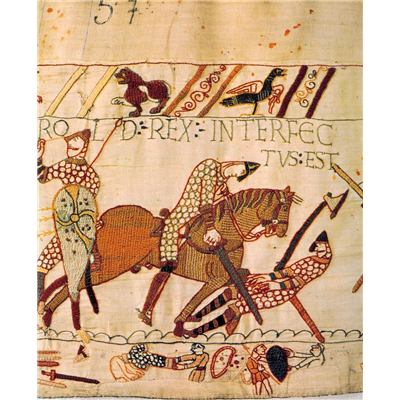 |
In this lively introduction to the tapestry – so much more than the story of Hastings – Rupert unravels some of its mysteries, places it in the context of its age and firmly establishes it as a landmark in the history of Western art. Commissioned by the Bishop of Bayeux who fought at Hastings, executed by skilled English craftsmen, the Bayeux Tapestry is the last survivor of a vanished art form. Rupert Willoughby presents a lively introduction to the tapestry – so much more than the story of Hastings – in which he unravels some of its mysteries, places it in the context of its age and firmly establishes it as a landmark in the history of Western art. With its lively illustrations of languid, party-loving, moustachioed Englishmen, of the cavalcades of noble huntsmen and of the snorting Norman cavalry poised to charge into battle, the Tapestry is the next best thing to a moving picture from the time.
Rupert Willoughby is a writer, researcher, lecturer, Latin-whisperer and impresario of ancient Greeks, with a passion for castles, lakes and uncovering the layers of the past. A graduate with First Class Honours in History from the University of London (where he immersed himself in the ‘Byzantine’, or medieval Greek Empire), he is the author of Mountain Gunner: The Wartime Adventures of Tony Fowle, M.C., of the best-selling Life in Medieval England for Pitkin, and of a series of popular histories of places, including Chawton: Jane Austen’s Village, and the whimsical, yet scholarly Basingstoke and its Contribution to World Culture; one reviewer described this as ‘a most entertaining and enlightening enterprise. It makes you want to visit Basingstoke, and that is quite some achievement.' Rupert is also an itinerant Classics master and he contributes regular obituaries to The Daily Telegraph. An experienced lecturer, accredited by The Arts Society since 2011, he is known for his light, humorous touch, his love of narrative and his vivid evocations of the past. Rupert’s forefathers were Vikings and his foremothers were Tatars. |
|
| Monday, 16 November 2026 |
| Monet and Hokusai: The Colour and Spaces of the Floating World |
| Sarah Jaffray |
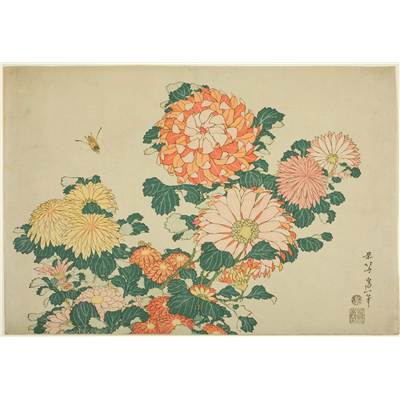 |
This talk looks at the affinities between Katsushika Hokusai (1760-1849) and Claude Monet (1840-1926) as a way to look at their famous works through a different perspective. Hokusai never knew Monet, but Monet knew Hokusai through his work and was transformed by the older artist's images of nature. We'll first introduce the innovative landscapes of Hokusai and what made them distinct for the time. We'll then see how Monet got his hands on the work of Hokusai and how it forever impacted his approach to making art.
Sarah Jaffray is an art historian, educator, curator and writer based in London. Before her current position as head of art history at City Lit, London's largest adult education college, Sarah was a curator in the Department of Prints and Drawings at the British Museum. For six years, she was the lead educator for the Bridget Riley Art Foundation and has also worked at Wellcome Collection exploring the connections of art, medicine and human experience. Prior to relocating to London for family, she was as a tenured professor of Art History based in Los Angeles. Sarah has been an art history lecturer since 2003. Her first MA in Art History focused on the links between poetry and painting in late 19th century France while her second MA in Cultural Studies focused on photography and political protest. Sarah lectures on a variety of topics and prefers to place artworks and objects in their wider social and cultural contexts, from the European Renaissance to the contemporary, emphasising new narratives and approaches to Western Art History. Her art historical research emphasises modern art, the politics and philosophies of the 19th and 20th centuries and how they are related to artistic process: drawing, printmaking, painting and photography. |
|
| Monday, 18 January 2027 |
| Behind The London Livery Companies - Objects And Stories |
| Joanna Mabbutt |
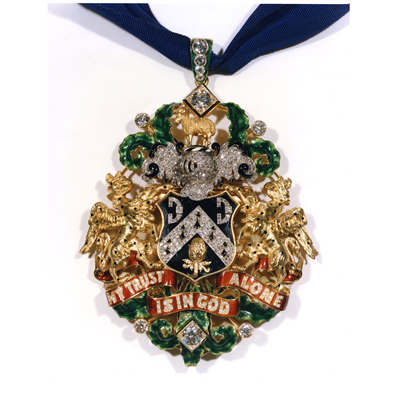 |
Over the centuries the Livery Companies of the City of London have accumulated fascinating treasures and intriguing objects which represent their craft and trade. These rare and curious items reveal the stories behind some of the world’s oldest crafts and guilds which have kept pace with modern times and are still very relevant today. They also give an insight into the Livery Companies’ medieval beginnings, their halls and traditional ceremonies. Reinventing themselves despite ravages of fire and warfare and challenges to their monopolies, today Livery Companies are revived and thrive through their philanthropic vocation, their continued support of trades, crafts and professions and their part in the system of local government in the City of London.
Joanna Mabbutt is a Liveryman of the Worshipful Company of Painter-Stainers and Freeman of the City of London. Originally a trained singer, pianist and orchestra administrator, Jo is now a decorative artist who gilds antique lace and crochet. She works to commission, sells through galleries and exhibitions and collaborates with other designers. Jo trained in wood graining, marbling, gilding, specialist paint finishes and interior design and was awarded the City & Guilds Silver Medal for Excellence in 2000. She taught in further education for 8 years on Art & Design National Diploma and Foundation courses then up-skilled at Central St Martin's College of Art & Design developing her own practice. She now divides her time as a designer/maker, lecturer and tutor running workshops for specialist groups. |
|
| Monday, 15 February 2027 |
| Beethoven: Deaf, suicidal and with deteriorating physical health - how did he manage such magnificent works |
| Alan Silman |
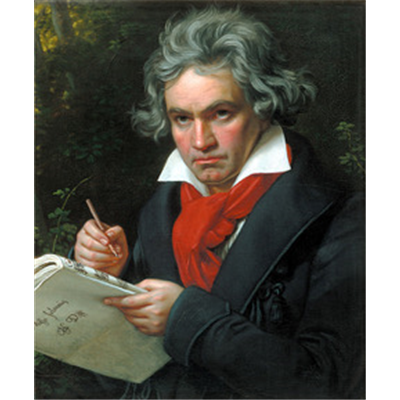 |
Beethoven’s deafness is well known but the psychological impact of this was devastating and also was far from his only problem. Less well known, is the parallel decline in his physical health and failure of many of his organs – the causes I discuss. From an unparalleled quantity of documented material, this lecture will describe in his own words the impact of all his challenges and on his phenomenal outputs. The talk is also richly illustrated with extracts of recordings of his works. I conceive of this talk like a medical "Desert Island Disc' as in - apologies to Lauren Laverne - "So Ludwig, tell us about your next symphony and what was going on health wise". But this is a serious story. As you listen to the short clips and at the same time hear about his declining health, this lecture will be an emotional roller coaster of a life's journey. Clearly dying, and in the most appalling physical distress, he was able to produce works such as the 9th Symphony, ironically based on the Schiller’s ‘Ode to Joy’ – a contradiction that defies credulity. In a final twist the lecture will show that laboratory analysis in the past 5 years of sampled of Beethoven’s hair have helped unravel the cause of his health problems!
In brief Professor Silman has had a career studying the long term effects of disabling disorders. The series of lectures offered to the Society is based on his research on a number of famous people in the arts, of the impact of their medical problems on their achievements. He has focused recently on engaging with lay audiences across a range of platforms aiming to inform, educate and at the same time to engage enotionally with the challenges and sorrows of may of his target subjects Currently Alan Silman is a Professor of Medicine at Oxford University and Senior Research Fellow at Green Templeton College Oxford. Prior to this for 8 years he was Medical Director of the charity Arthritis Research UK (ARUK - now called Versus Arthritis). He is an epidemiologist with a particular interest in diseases of bones, muscles and joints. He has authored over 700 research publications and a number of textbooks. He is amongst the top 100 published scientists across all disciplines in UK universities. He has been an advisor on several government committees including chairing the Appeals Panel for NICE, which sits when there is an appeal if NICE had rejected the use of a drug for the NHS. He has also appeared before a number of UK Parliamentary Select Committees. In his role at ARUK he was responsible, not only for the charity’s research portfolio, but to be ‘the voice’ to both the general public as well as all broadcast and print media on matters related to arthritis. He has received substantial media training in that role. In recent years his focus has been on explaining complexities of science to the informed lay public, best exemplified by his blog during the Covid-19 pandemic which reached 100 countries at its peak He is passionate about the arts and has researched intensively the medical history of well-known individuals. From these researches, he has developed a series of lectures addressing how the lives and outputs, of such individuals were affected by their health. These talks have been given widely to a number of audiences across the UK to U3A, Probus and other community and professional groups. In his spare time, he is a lover of theatre and an amateur drama enthusiast, and he directed his first play in 2024! |
|
| Monday, 15 March 2027 |
| Princess Louise: an Aesthetic sculptor locked away in the Royal Archives |
| Lucinda Hawksley |
 |
When researching my biographies of Lizzie Siddal and Kate Perugini, I kept coming across a mysterious princess, attending studio parties, helping fellow artists in times of need, and being linked with several scandals. I was amazed to discover Princess Louise was a daughter of Queen Victoria and Prince Albert, and a well-respected sculptor. Her life and legacy has been locked away in the Royal Archives ever since her death in 1939, but her work was stunning, and her life fascinating. Researching her biography was like being a detective, so I titled my book The Mystery of Princess Louise
Lucinda Hawksley is an author, broadcaster, lecturer and award-winning travel writer, who has worked as an interviewee, consultant and presenter on TV and radio shows worldwide. She has written three biographies of female artists: Kate Perugini (née Dickens), Princess Louise and Lizzie Siddal. Her other books include, Victorian Christmas, Dickens and Travel, Letters of Great Women, Elizabeth Revealed, Dickens and Christmas, The Writer Abroad, Bitten by Witch Fever: Wallpaper and Arsenic in the Victorian Home, Charles Dickens and his Circle, Moustaches, Whiskers & Beards (Facial Hair in Art), and March, Women, March: Voices of the Women’s Movement. Lucinda’s many TV credits include Miriam’s Dickensian Christmas, a show she created with the Dickens-loving actress Miriam Margolyes, Charles Dickens with Gyles Brandreth, World’s Greatest Paintings, A Very Country Christmas, Paul O’Grady’s Great British Escape, The Project, Landscape Artist of the Year, Queen Victoria and her Tragic Family, Cathedrals of Steam – Europe’s Most Famous Train Stations, Missing Masterpieces, Queen Victoria’s Children, Mrs Dickens’s Family Christmas, Dickens and Health, Find My Past: The Staplehurst Rail Crash, Charles Dickens’s Secret Lover and Charles Dickens and the Invention of Christmas. Lucinda co-wrote and narrated The Real Sherlock, a six-part podcast series about Arthur Conan-Doyle, for Audible. She has also written and narrated, for Audible, the introductions for Our Mutual Friend and The Mystery of Edwin Drood. Her other voice-over work includes art gallery audio guides and a children’s audio guide to Stonehenge. She is a great great great granddaughter of Charles and Catherine Dickens, and a Patron of the Charles Dickens Museum in London; she is also a Patron of the De Morgan Foundation. In 2024 she became the President of the International Dickens Fellowship. |
|
| Monday, 19 April 2027 |
| The Magnificence Of The Inca Empire |
| Eileen Goulding |
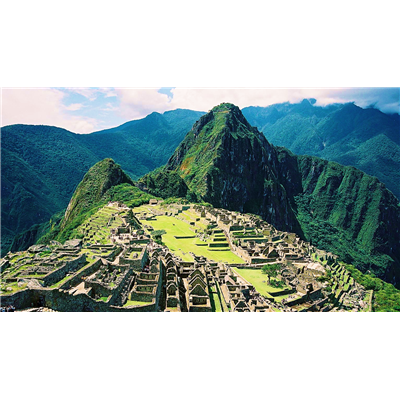 |
This most famous of pre-Colombian cultures had no wheels, no iron, no written language and yet they built an empire in less than 200 years . Discover how they did it and see examples of their talent for making adornments of gold and other precious materials.This is a story of human ambition at its peak, and what that can achieve.
After a career in finance, Eileen Goulding studied Ancient Egypt and was awarded an MA Egyptology in 2012. Since then she has written and had two books published, become an accredited lecturer for the Arts Society and an Enrichment Lecturer for several cruise lines.
Her scope of interest and research has developed and expanded from Egypt to history in general and indigenous societies in particular.
In recent years Eileen has studied extensively the empires of Central and South America, tribal histories of South Africa. Australian Aboriginals and the Crusades of the 11th and 12th centuries. She has indulged her love of the sea by learning about pirates during the Golden Age of Piracy. This has resulted in several more interesting and informative talks to add to her portfolio.
She is known for her warm, lively and informative style and loves to share her enthusiasm and specialist knowledge of many of the world’s ancient civilisations. Her range of talks cover Australia, the Caribbean, Central and South America, Europe, Egypt, Greece and South Africa. |
|
| Monday, 17 May 2027 |
| The Silk Road |
| Chris Aslan |
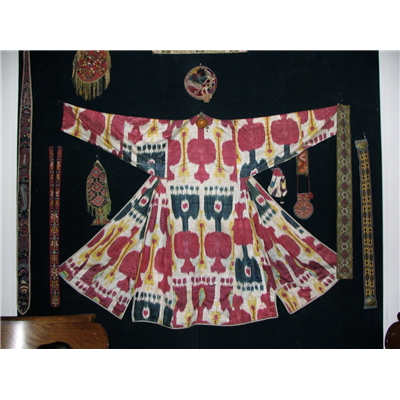 |
In this lecture we explore the birth of the Silk Road and how silk fuelled trade in goods, foods, art, inventions, commodities, religions, fashions and so much more, ushering in the first era of globalisation. We explore how silk is woven into beautiful fabrics, such as, atlas, velvet, and adras, and how fabric was a major signifier of wealth and stratifying sedentary society. How did one item of women’s clothing spark a culture war which led to public burnings of silk? We marvel at the dowry embroideries produced in Bukhara and the magical and amuletic protection woven into most clothing. We explore how silk stratified society, through stunning robes and turbans, and Chris gives a brief overview of the silk carpet workshop he founded in Khiva, Uzbekistan
Chris Aslan was born in Turkey and was raised there and in war-torn Beirut. This set him on a course for an adventurous life and he has spent two years at sea, and lived in Central Asia for 15 years. He started off in Khiva, a desert oasis in Uzbekistan, establishing a UNESCO workshop reviving fifteenth century carpet designs and embroideries, and becoming the largest non-government employer in town. He was deported as part of an anti-Western purge, and took a year in Cambridge to write A Carpet Ride to Khiva. Chris then spent several years in the Pamirs mountains of Tajikistan, training yak herders to comb their yaks for their cashmere-like down. Next came a couple more years in Kyrgyzstan living in the world’s largest natural walnut wood and establishing a wood-carving workshop. Since then, Chris has studied and rowed at Oxford and now divides his time between lecturing for the Arts Society, writing fiction and non-fiction in his mountainous home overlooking the sea in North Cyprus where he is overrun by cats, and returning to Central Asia to lead tours whenever he can, having left a large chunk of his heart there. His latest book is Unravelling the Silk Road. |
|
| Monday, 21 June 2027 |
| Masters of Art Nouveau: Émile Gallé, René Lalique and Louis Comfort Tiffany |
| Anne Anderson |
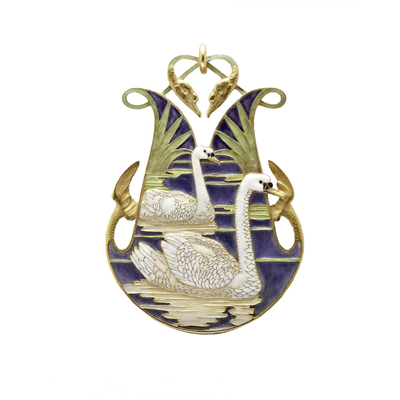 |
Masters of Art Nouveau: Émile Gallé, René Lalique and Louis Comfort Tiffany Launching his cameo glass at the 1889 Paris International Exhibition, Emile Galle kick started the Art Nouveau movement. A designer, botanist and chemist Galle was constantly perfecting new techniques reaching a zenith with glass marquetry. As progenitor of l’ Ecole de Nancy, a confederation of fellow artists, he collaborated with Louis Majorelle and Victor Prouve. Although Lalique is best known for his Art Deco glass of the inter-war years, his career began in the early 1890s as the designer of the finest Art Nouveau jewellery. Sarah Bernhardt worn his eyecatching jewels on stage. Louis Comfort Tiffany was destined to go into the family business, but he opted for a career as an interior decorator instead. Today his name is synonymous with lamps and stained-glass windows, his technique being likened to ‘painting’ with coloured glass. He was, like Galle and Lalique, inspired by Japan and you will find many key Art Nouveau motifs in his work- dragonflies, butterflies, peacocks and all kinds of flowers. Be dazzled by the beauty of Art Nouveau, which reached its apogee in 1900.
With a first degree in archaeology and a PhD in English, Anne Anderson was a senior lecturer in Art and Design History at Southampton Solent University for 14 years. She has curated four national exhibitions, including Ancient Landscape, Pastoral Visions: Samuel Palmer to the Ruralists (2008), The Truth About Faeries (2009-11), Under the Greenwood: Picturing the British Tree (2013) and Beyond the Brotherhood The Pre-Raphaelite Legacy (2019-20). Her book on The Perseus Series accompanied the Edward Burne-Jones exhibition (2018, Tate Britain). Anne has also published over a hundred academic papers. She has held several prestigious fellowships including Fellow of the Huntington Library, CA (2008-09 and 2018-19) and Fellow of the Henry Francis DuPont Winterthur Library and Museum (2009/10). Currently a guide and lecturer, Anne specialises in Art Nouveau and Arts and Crafts art tours. Her career as an international speaker has taken her all over the world, including Jersey, Spain, Germany, New Zealand, Canada and the USA. She undertook her sixth lecture tour for ADFAS/ArtsNational Australia in 2024. |
|
| Monday, 19 July 2027 |
| The Slade School of Fine Art: From The Bloomsbury Group to Antony Gormley – The Training Ground of Britain’s Most Influential Artists |
| Ian Giles |
 |
This lecture explores the Slade School of Fine Art as a crucial training ground for some of Britain’s most influential artists. Founded in 1871, the lecture begins by examining the school’s guiding ideals and its emphasis on disciplined drawing and critical thought. The lecture then considers the work of the Bloomsbury Group, highlighting key Slade figures such as Vanessa Bell and Duncan Grant and their role in shaping modern British art and design. Moving through the twentieth century, it explores major artists including Augustus John, Stanley Spencer, Paul Nash, Paula Rego and Euan Uglow. The lecture concludes with more recent alumni such as Antony Gormley, Rachel Whiteread and Phyllida Barlow, underscoring the Slade’s enduring cultural impact.
Ian Giles studied at the Slade School of Fine Art and is a practising artist. His artworks and films have been shown internationally, including at MoMA PS1 (New York), the Stedelijk Museum (Amsterdam), and the Whitechapel Gallery (London). He has been a visiting lecturer at Chelsea College of Arts, Cambridge School of Art, Camberwell College of Arts, Birmingham School of Art and the University of Cambridge, Department of Architecture. His work has been supported by Arts Council England, Art Fund, The Jerwood Foundation, and the Arts and Humanities Research Council. Recent press coverage includes features and reviews in The Guardian, Frieze, Artforum, and on BBC radio and television. In 2026 he will present exhibitions and projects at Queer Britain, Southampton City Art Gallery and Norwich Castle Museum and Art Gallery. Awards, Qualifications & Memberships: - Masters in Fine Art from Slade School of Fine Art, UCL
- BA (Hons) Fine Art from Chelsea College of Arts, UAL
- Foundation at Camberwell College of Arts, UAL |
|